Part 3: Simplifying the Balance Sheet – A Snapshot of Your Business’s Health
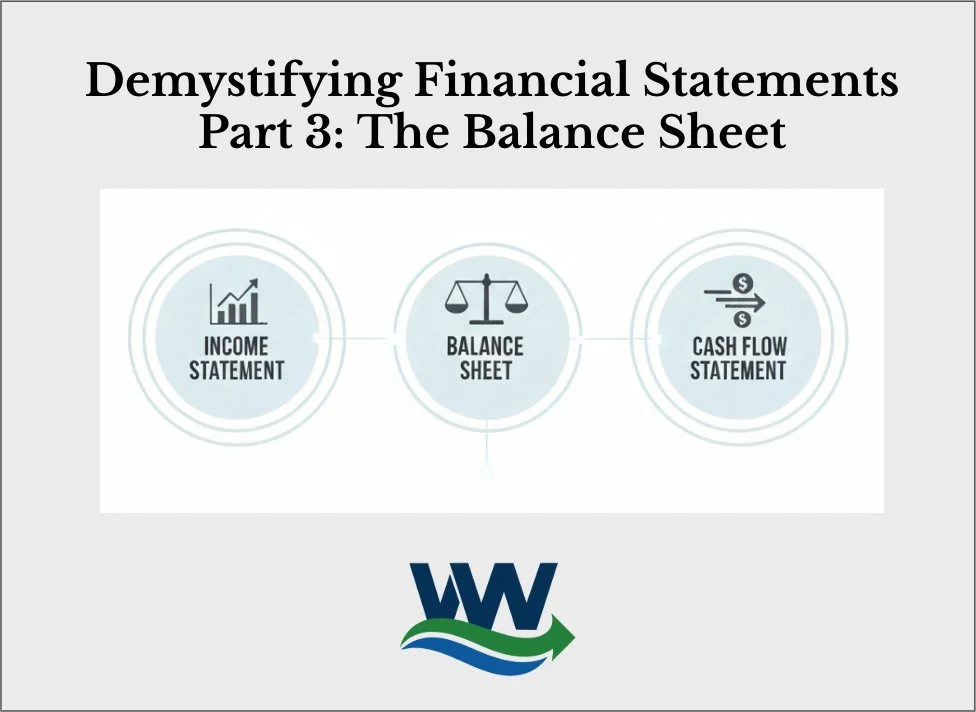
In Part 2, we discussed the Income Statement and how it shows profitability over time. The Balance Sheet has a different purpose. It gives you a point-in-time picture of your business's financial position. It follows a straightforward equation: Assets = Liabilities + Equity.
This is especially useful for Oregon small businesses navigating cash flow challenges, regulatory changes, or growth decisions—it shows exactly what you own, what you owe, and how much is truly yours.
Key Components in Plain English:
Assets — What the business owns.
Current Assets: Cash, inventory, accounts receivable (money owed to you).
Non-Current Assets: Equipment, vehicles, property.
Liabilities — What the business owes.
Current Liabilities: Short-term debts, bills due, taxes.
Non-Current Liabilities: Longer-term loans.
Equity — Your ownership stake (Assets minus Liabilities), including money you've invested and profits kept in the business.
Example: A Bend service firm shows $100,000 in total assets, $50,000 in liabilities, and $50,000 in equity. If receivables are aging (slow to collect), it can inflate assets on paper—highlighting the need for better follow-up to strengthen real cash positions.
Quick Tips:
Use asset breakdowns to identify underutilized resources, like excess inventory, and streamline operations.
Monitor debt levels to maintain a healthy buffer for economic shifts common in Oregon's small business landscape.
Pair your Balance Sheet with monthly reconciliations to catch discrepancies before they impact decisions.
Track liabilities against upcoming deadlines, such as Oregon tax filings, to avoid surprises.
The Balance Sheet helps confirm whether your day-to-day profits are building lasting stability and value.
If your Balance Sheet feels outdated or confusing, our monthly reviews and hands-on guidance make it simple. Schedule a free consultation at www.willametteway.com and find a better way.
Coming next: Part 4 on the Cash Flow Statement.